
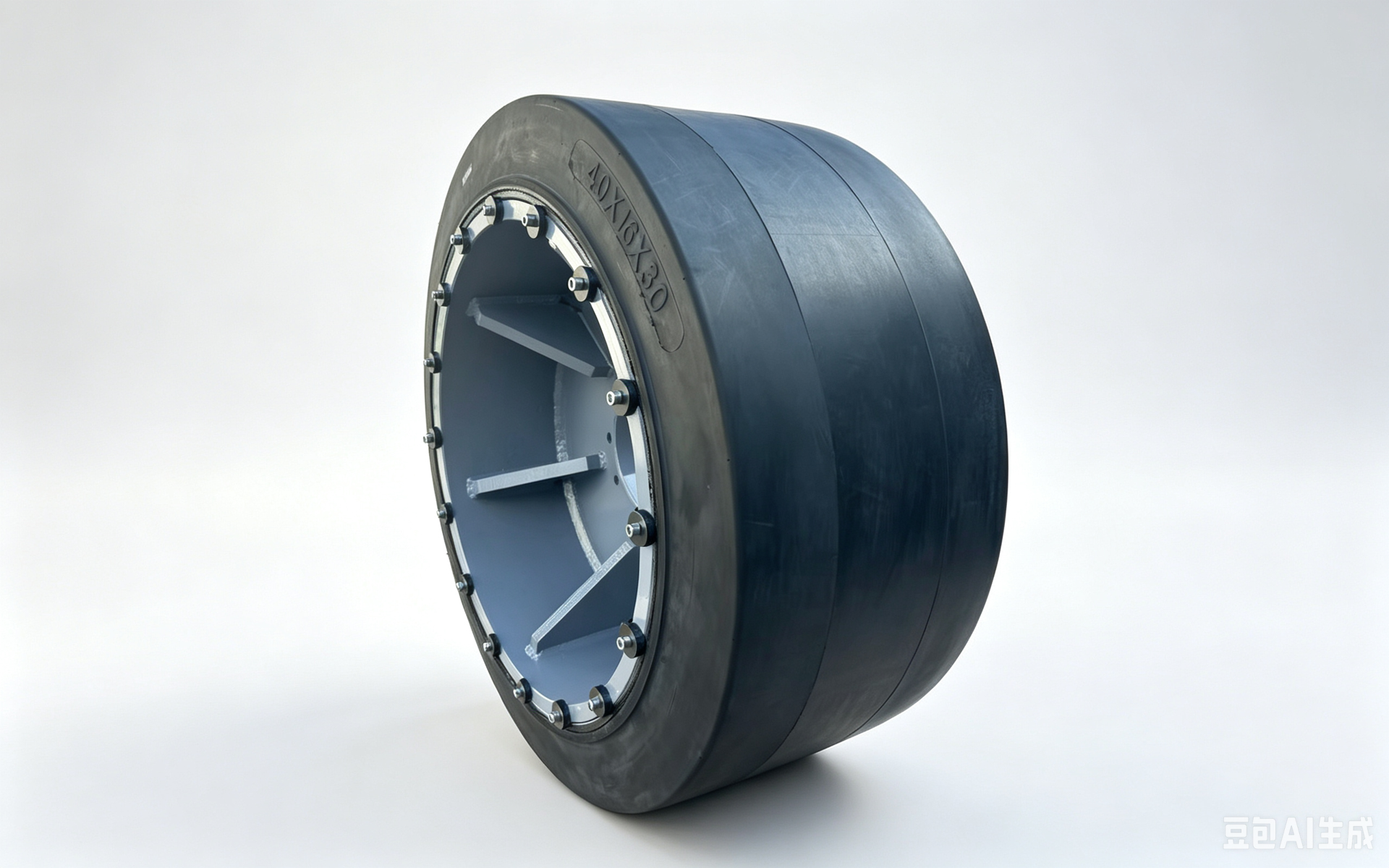
⚙️ Press-on / Cushion Tyres
Press-on Tyres for Industrial Forklifts
Press-on (cushion) tyres are designed for electric sit-down forklifts and other indoor material handling equipment operating on smooth concrete floors. They mount directly onto the metal wheel rim without the need for a separate rim.
Key Features
Typical Applications
Available Models
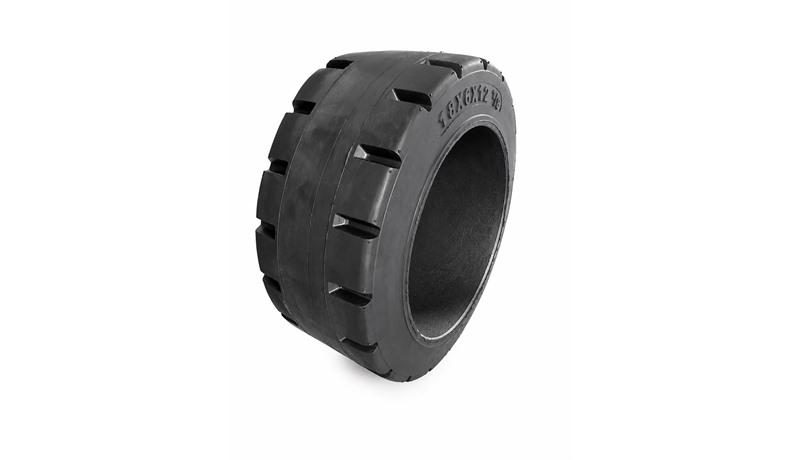 Non-Marking
Press-on Solid Tyre – 18×6×12 1/8
Model: JB-POT-18×6×12
Load: 1355–9185 kg (size dependent)
Compound: Standard / Non-Marking
Full Size Chart – Press-on / Cushion Tyres
All sizes available in standard black and non-marking (white/grey) compound. Load capacities in kg.
| Tyre Size | OD (mm) | SW (mm) | ID (mm) | Load @ 10 km/h (kg) | Load @ 16 km/h (kg) |
|---|---|---|---|---|---|
| 15×5×11 1/4 | 381 | 127 | 286 | 1,565 | 1,355 |
| 16×5×10 1/2 | 406 | 127 | 267 | 1,565 | 1,355 |
| 16×6×10 1/2 | 406 | 152 | 267 | 1,955 | 1,695 |
| 18×7×12 1/8 | 457 | 178 | 308 | 3,000 | 2,600 |
| 18×6×12 1/8 | 457 | 152 | 308 | 2,350 | 2,035 |
| 20×8×16 | 508 | 203 | 406 | 3,820 | 3,310 |
| 21×7×15 | 533 | 178 | 381 | 3,150 | 2,730 |
| 21×8×15 | 533 | 203 | 381 | 3,820 | 3,310 |
| 22×7×17 | 559 | 178 | 432 | 3,150 | 2,730 |
| 22×9×16 | 559 | 229 | 406 | 4,700 | 4,075 |
| 23×9×17 | 584 | 229 | 432 | 4,700 | 4,075 |
| 23×10×16 | 584 | 254 | 406 | 5,700 | 4,940 |
| 24×9×17 | 610 | 229 | 432 | 4,700 | 4,075 |
| 25×9×17 | 635 | 229 | 432 | 4,700 | 4,075 |
| 27×10×19 | 686 | 254 | 483 | 5,700 | 4,940 |
| 28×9×22 | 711 | 229 | 559 | 4,700 | 4,075 |
| 28×12.5×22 | 711 | 318 | 559 | 7,950 | 6,885 |
| 31×10×22 | 787 | 254 | 559 | 5,700 | 4,940 |
| 33×12×23 | 838 | 305 | 584 | 8,150 | 7,065 |
| 36×14×23 | 914 | 356 | 584 | 10,600 | 9,185 |
| 36×12.5×24 | 914 | 318 | 610 | 7,950 | 6,885 |
| 40×14×24 | 1016 | 356 | 610 | 10,600 | 9,185 |
| 28×9×15(Band)Band type | 711 | 229 | 381 | 4,700 | 4,075 |
* OD = Overall Diameter, SW = Section Width, ID = Inner Diameter. Non-marking compound available for all sizes on request.
Technical Buying Guides
Use these guides together with the size tables above, then confirm the equipment model, rim dimensions and operating conditions before ordering.
Press-on tyres: what they are and where they belong
A press-on tyre is a rubber ring bonded onto a steel band and pressed onto the wheel hub under hydraulic pressure. There is no rim, no locking ring and no air — the tyre and band together form the wheel. It is the standard fitment on cushion-tyre forklifts, reach trucks, order pickers and other indoor electric trucks working on smooth concrete.
The distinction that matters commercially is that cushion-tyre trucks and pneumatic-tyre trucks are not interchangeable. A cushion truck’s hub is built for a pressed-on tyre; a pneumatic-tyre truck’s hub is built for a rim-mounted solid or pneumatic tyre. The truck decides the type, not preference and not price.
Press-on versus rim-mounted solid: choose by the truck
| Question | Press-on tyre | Rim-mounted solid tyre |
|---|---|---|
| Which trucks use it | Cushion-tyre forklifts, reach trucks, order pickers, VNA trucks | Pneumatic-tyre trucks, IC counterbalance, yard and outdoor machines |
| How it mounts | Bonded to a steel band, pressed onto the hub | Mounted on a rim with a locking ring or multi-piece assembly |
| Rim required | No — the band replaces the rim | Yes |
| Typical floor | Smooth indoor concrete | Indoor and outdoor, rougher surfaces |
| Ride | Firmer, less cushioning | More forgiving on uneven ground |
| Fitting equipment needed | Hydraulic press | Tyre changer and rim tools |
| Non-marking availability | Yes, most sizes | Yes, most sizes |
Reading a press-on size
Press-on sizes are written as overall diameter × section width × band diameter, all in inches. All three numbers must match the machine — the band diameter in particular cannot be approximated, because a band that is even slightly out of size will not press on correctly, and forcing it damages both the band and the hub.
Worked example: 18×7×12 means 18 inches (457 mm) overall diameter, 7 inches (178 mm) section width, and a 12 inch (308 mm) band. If your machine calls for a 308 mm band, a 406 mm band tyre of otherwise similar dimensions is not a substitute.
Matching press-on tyres to common machine classes
Band diameters are given in millimetres for clarity because press-on measurements are frequently checked with a tape rather than read from a marking. Confirm against the machine specification before ordering.
| Machine class | Typical band diameters | Typical section widths | Notes |
|---|---|---|---|
| Small electric and narrow-aisle trucks | 267–286 mm | 127–152 mm | Often the lightest duty; non-marking common |
| Electric counterbalance, 1.5–2.5 t | 308–381 mm | 152–203 mm | The highest-volume press-on range |
| Reach trucks and VNA | 381–432 mm | 178–254 mm | Stability depends on correct band fit |
| Heavy cushion trucks | 432–559 mm | 229–318 mm | Load ratings rise sharply with band size |
| Large capacity indoor trucks | 559–610 mm | 254–356 mm | Compounds often matched to specific site conditions |
Mounting, wear and replacement
Press-on tyres should be fitted with a hydraulic press and the correct fitting procedure. Fitting without a suitable press risks damaging the band, the hub or the tyre, and a damaged band may look serviceable while being unsafe.
Many customers avoid the problem altogether by ordering tyres pre-mounted on wheels. That removes the pressing step from the workshop and suits dealers who resell to end users without their own fitting equipment.
On wear: replace when the rubber wear approaches the wear indicators, when the tyre is cut or chunked deeply, or when bonding separation is visible between the rubber and the band. On high-hour trucks, make the wear check part of the weekly walkaround — a worn press-on tyre is the most common cause of a sudden loss of traction indoors.
Ordering press-on tyres from JABIL
To quote, we need the tyre size, band diameter, quantity and destination. For a machine we have not seen before, the machine model plus a photo of the existing tyre is usually enough for us to confirm fitment.
- Standard black compound, or non-marking for clean-floor sites
- Anti-static, oil-resistant and cold-store compounds produced to order
- Loose tyres, or pre-mounted wheels for workshops without a press
- Pair-matched drive and steer sets supplied on request
- MOQ from 20 pieces per size, mixed sizes supported in one container
- Typical production lead time 15–25 days after confirmation
Common press-on tyre questions
Cushion-tyre forklifts, reach trucks, order pickers and narrow-aisle electric trucks — in short, indoor electric machines on smooth concrete. Pneumatic-tyre trucks use rim-mounted solids instead.
Not safely. A press-on tyre is bonded to a steel band and must be pressed onto the hub under hydraulic pressure. Attempting it without a press risks damaging the band, the hub and the tyre. Ordering pre-mounted wheels removes the problem entirely.
Measure the overall diameter across the tyre, the section width across the tread, and the band diameter with the wheel removed. Match all three against the size chart. Send a photo with a tape visible and we will confirm.
Most sizes, made to order. Non-marking is the standard choice for food, beverage, pharmaceutical, electronics and clean logistics sites.
Wrong band diameter forcing an incorrect press fit, running past the wear limit, working outside the compound’s temperature range, and oil contamination attacking the bond. Correct specification prevents most premature failures.
Yes. Pre-mounted sets arrive ready to bolt on, which suits dealers reselling to end users and workshops without a suitable press.
Where to go next
If your trucks run on multi-piece rims rather than press-on bands, the forklift solid tyre range covers those sizes. For a wider comparison of band and rim-mounted options before you specify, read press-on versus rim-mounted solid tyres. Wheel assemblies and rims are listed separately under rims and accessories.
Press-on / Cushion Tyres — Buyer Questions
What is a press-on tyre and how does it differ from a solid tyre on a rim?
A press-on tyre is a rubber ring bonded onto a steel band and pressed onto the wheel hub under hydraulic pressure. There is no rim, no locking ring and no air. It is the standard fitment for cushion-tyre forklifts, reach trucks and other indoor electric trucks.
How do I read a press-on tyre size such as 18×7×12?
Press-on sizes are written as overall diameter × section width × band diameter, all in inches. For 18×7×12 the tyre is 18 inches (457 mm) across, 7 inches (178 mm) wide, and fits a 12 inch (308 mm) band. All three numbers must match — a wrong band diameter cannot be pressed on.
My truck takes press-on tyres. Can I fit rim-mounted solids instead?
No. Cushion-tyre trucks are built for press-on tyres and pneumatic-tyre trucks for rim-mounted solids — the hubs are different. Send your equipment list and we will map each truck to the correct tyre type and size in one pass.
Does JABIL supply press-on tyres already mounted on wheels?
Yes. We supply loose press-on tyres and pre-mounted wheels for dealers who do not have a suitable press. Pre-mounted sets arrive ready to bolt on, which removes the pressing step from your workshop entirely.
What compounds are available for press-on tyres?
Standard black for general indoor work and non-marking for clean-floor environments. Anti-static, oil-resistant and cold-store compounds can be adjusted at the factory — tell us the operating environment before assuming a standard compound is your only option.