
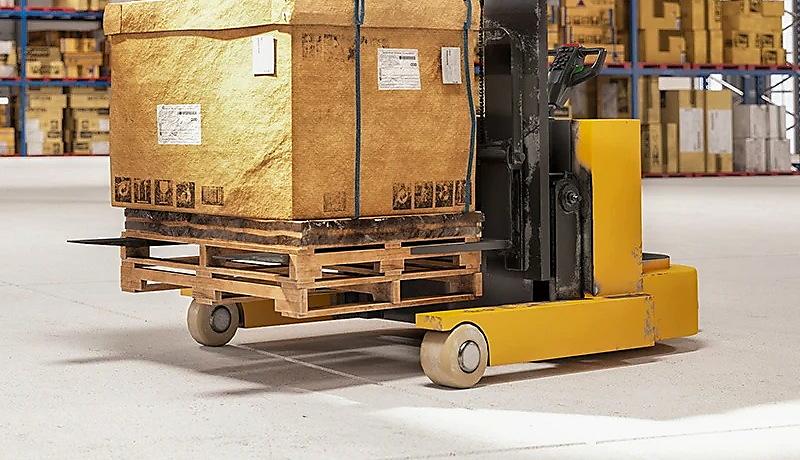
Electric stackers and pallet trucks can use either PU wheels or rubber solid tyres. We compare both options on load rating, floor compatibility, and total cost of ownership.
Understanding the Two Options
Electric stackers, pallet trucks, and reach trucks use a different wheel configuration than counterbalance forklifts. The drive wheel (which provides traction) and load wheels (which support the forks) are typically smaller diameter, and they can be specified in either polyurethane (PU) compound or rubber solid tyre compound.
The choice between PU and rubber is not arbitrary — it has significant implications for floor life, wheel life, energy efficiency, and cost.
Polyurethane (PU) Wheels
PU wheels are made from a cast or moulded polyurethane compound bonded to a precision-machined steel or aluminium hub. They are characterised by: A typical application is the 85x100 PU drive wheel used on compact electric equipment, where the drive wheel runs high hours under continuous torque.
- Excellent floor protection — PU is significantly softer in contact than rubber at low temperatures, reducing floor wear
- Non-marking by nature — standard orange or yellow PU compound leaves no dark marks
- Low rolling resistance — reduces battery consumption on electric machines
- High load capacity in a small diameter — PU can handle heavy axle loads in a compact form factor
- Shore A hardness typically 80–92, customisable for specific applications
For the full range, browse our polyurethane wheels catalogue with hub options and hardness grades.
Rubber Solid Tyre Wheels
Rubber solid tyres (including press-on / cushion band tyres) offer a different set of characteristics: On the rubber side, the 4.00-8 rubber solid tyre shows the rim-mounted construction that suits heavier counterbalance trucks.
- Better shock absorption — rubber deflects more under impact load than PU
- Higher abrasion resistance on rough floors — rubber outperforms PU on concrete with surface contamination or grit
- Lower initial cost — standard rubber compound is cheaper to produce than PU
- Wider temperature range — rubber performs better at very low temperatures (cold storage)
Which Should You Choose?
As a general rule:
- PU wheels — best for clean indoor environments with smooth, high-quality concrete or tile floors. Best for electric pallet trucks and stackers used in food, pharma, and logistics.
- Rubber solid tyres — better where the floor surface is rough, contaminated with grit, or subject to temperature extremes (cold storage below -10°C). Also better where higher shock loads occur.
- PU for drive and load wheels, rubber for stabiliser/balance wheels — a common mixed specification for some reach truck configurations.
If the choice still is not obvious, comparing the 6.00-9 solid tyre options page against your equipment list usually settles it — the truck's original fitment decides the family. If your trucks run press-on rims instead, our press-on tyres guide explains fitment and compound choices. Related reading: when to replace forklift solid tyres: 7 warning signs.
JABIL Technical Note
JABIL supplies both PU wheels (with machined steel hub) and rubber press-on / cushion band tyres. We can advise on the correct specification for your machine make and model.
Have questions about your specific application?
Frequently Asked Questions
What is the difference between polyurethane and rubber wheels?
Polyurethane wheels carry higher loads in the same footprint, resist cutting and chunking on smooth floors, and roll with less resistance. Rubber wheels absorb shock better, grip better on uneven or wet surfaces and suit rougher environments.
Which lasts longer, polyurethane or rubber?
On clean, smooth indoor floors polyurethane normally lasts considerably longer. On rough, debris-strewn or wet ground, rubber often wins because polyurethane is more vulnerable to cutting. Floor condition, not price, is the deciding factor.
Can polyurethane wheels replace rubber wheels directly?
Sometimes, but the load, speed, floor and hub must all be checked. Polyurethane and rubber are not interchangeable on specification alone — a substitution that ignores load capacity can fail early and dangerously.
Where are polyurethane wheels the standard choice?
Warehouse trucks, AGVs, tow tractors, castors and industrial handling equipment on good indoor floors, especially where high load and low rolling resistance are both required.
Which should I choose for a mixed indoor and outdoor site?
A rubber solid wheel is usually the safer single specification for a genuinely mixed site. Polyurethane is best reserved for the indoor portion of the fleet, so the specification matches the wheels to the work each set actually does.