
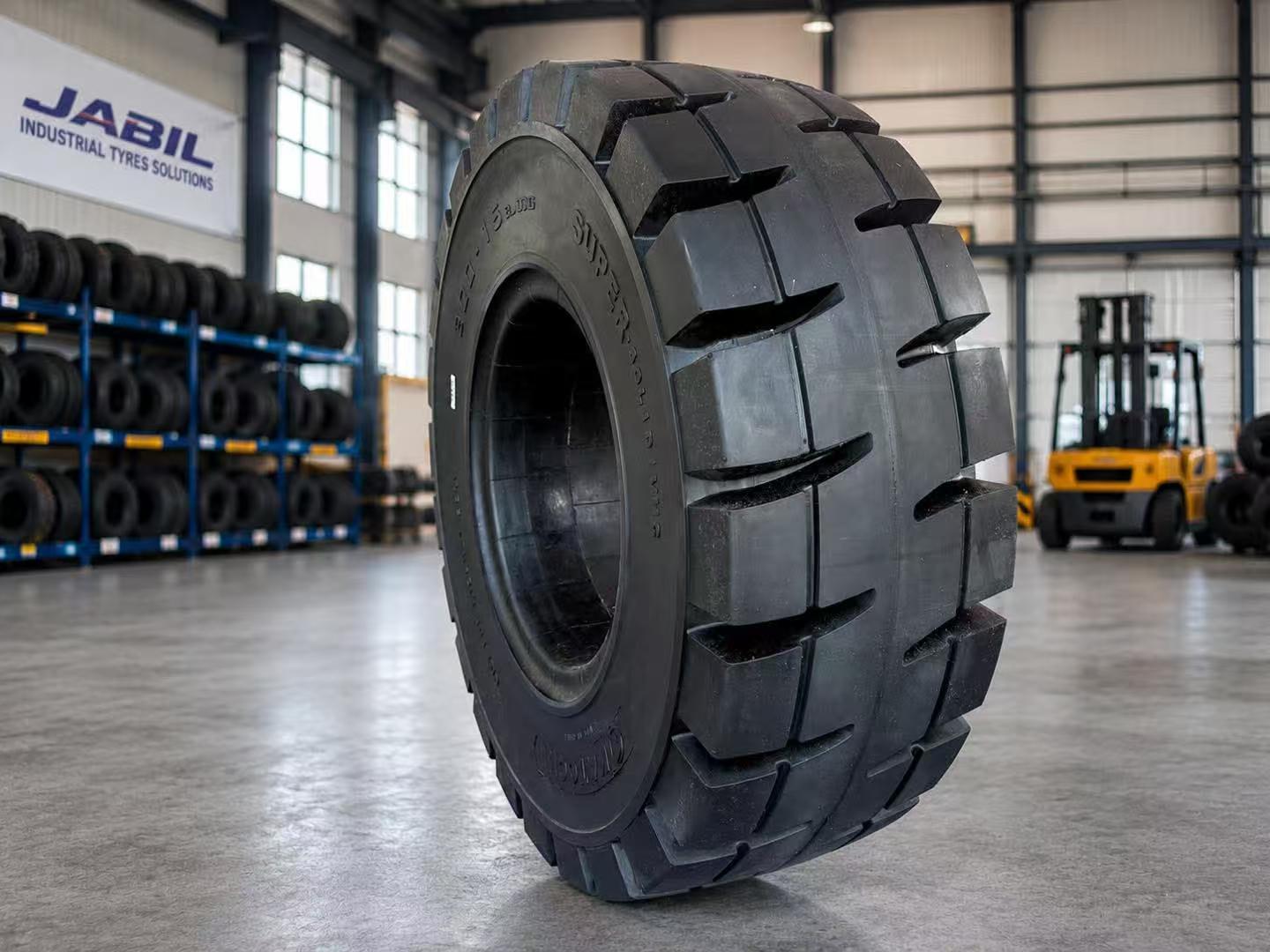
Rising demand for electric forklifts, tighter floor-marking regulations in food facilities, and supply chain shifts are all reshaping how buyers source industrial solid tyres in 2025.
The Electric Forklift Shift is Accelerating
One of the clearest trends in 2025 is the continued acceleration of electric forklift adoption globally. As battery technology improves and charging infrastructure matures, more warehouses and logistics operators are switching from LPG and diesel counterbalance forklifts to electric alternatives.
For solid tyre buyers, this has direct implications. Electric forklifts operate at lower speeds and are predominantly used indoors, which increases demand for non-marking solid tyres and press-on (cushion) band tyres. Buyers sourcing for electric sit-down forklifts should review their tyre specifications accordingly. That shift shows up at the size level too — demand for the 200/50-10 electric forklift tyre grows with every electric truck added to a fleet.
Non-Marking Requirements Are Becoming Standard
Food processing, pharmaceutical, and clean-floor logistics facilities are increasingly mandating non-marking tyres as a condition of equipment approval. This has moved non-marking compound from a premium option to a standard specification in many sectors.
White and grey compound solid tyres leave no carbon deposits on polished or tiled floors, eliminating contamination risk and reducing cleaning overhead. At JABIL, non-marking variants are available across our full forklift solid tyre range and scissor lift tyre range. What was once a special request is now a stocking item — the non-marking 18×7-8 tyre is a case in point for 1.5–2.5 tonne fleets.
Supply Chain Diversification from China
Global supply chain disruptions over the past several years have prompted importers to dual-source their tyre supply. While China remains the dominant manufacturing base for industrial solid tyres by volume and cost efficiency, buyers are increasingly seeking established factories with verifiable quality control rather than lowest-price-only sourcing.
This has benefited specialised manufacturers who can provide consistent batch quality, detailed specifications, and responsive technical support — rather than brokers reselling unbranded product. Buyers diversifying suppliers typically start with a high-volume size — 21x8-9 solid tyre supply from a single factory is exactly the kind of line they move first.
Key Procurement Takeaways for 2025
Based on current market conditions, buyers should consider the following:
- Audit your fleet for non-marking compliance requirements before placing bulk orders
- Review whether electric forklift conversions require a tyre specification change
- Consolidate supplier relationships with factories offering full technical data and QC documentation
- Build modest safety stock for popular sizes given ongoing logistics variability
- Request compound certification (hardness, non-marking test report) when sourcing new suppliers
Have questions about your specific application?
Frequently Asked Questions
What were the main solid tyre trends in 2025?
Continued conversion from pneumatic to solid tyres in warehouse fleets, growing demand for non-marking compound driven by clean-floor regulation and tenant fit-out standards, and heavier price pressure from raw-material and freight movements.
Are buyers switching to cheaper suppliers?
Some are, with mixed results. Where the tyre is in a low-cost, low-load application a cheaper supply can work. Where downtime is expensive, buyers have moved the other way — back to suppliers who can hold a specification and a delivery date.
What is happening to lead times?
Lead times have normalised compared with the disruption years but remain sensitive to freight capacity on major trade lanes. Importers who plan in quarters rather than weeks are weathering the swings better.
Is non-marking becoming standard?
It is becoming standard in food, pharma, electronics and modern logistics buildings, and remains optional in general industrial and outdoor work. The shift is driven by floor specification and site rules, not by the tyre industry.
What should dealers watch in the next cycle?
Size-mix changes as fleets electrify — electric trucks often run different sizes and loads from the diesel machines they replace. A dealer tracking customer fleet orders will see the size shift before the market data shows it.