
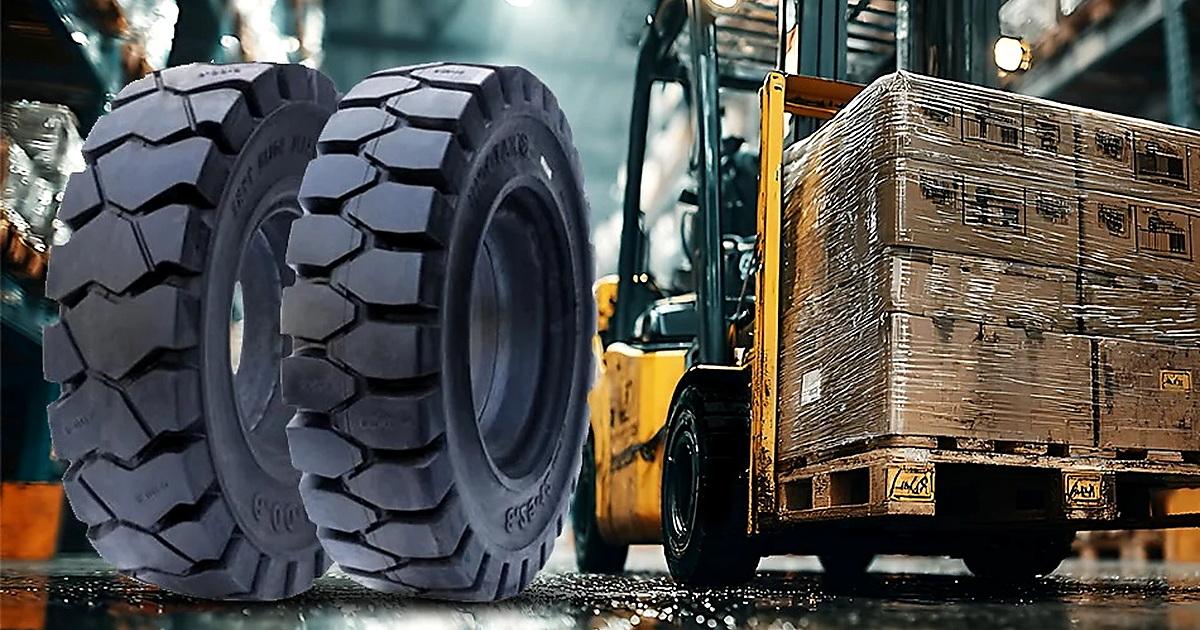
Selecting the correct solid tyre for your forklift depends on more than just size. This guide covers the key factors: operating environment, load capacity, compound selection, and rim compatibility.
Step 1 — Read the Tyre Size from Your Existing Tyre
The first step is to identify the correct size. Solid forklift tyres use a three-number format: width × section height × rim diameter, or in metric: overall diameter × section width — rim diameter. Common examples: 18×7-8, 23×9-10, 28×9-15. For example, if your sidewall reads 18×7-8, you are looking at the standard 18×7-8 forklift solid tyre, the most common size on 1.5–2.5 tonne trucks.
You will find the size moulded on the sidewall of your existing tyre, or in your forklift's operating manual under the tyre specification section. If the forklift has been on previous tyres of a different brand, always cross-reference the size rather than just copying the brand reference number.
Step 2 — Match the Rim
The tyre size alone is not sufficient — you also need to confirm the rim width. Solid tyres are designed for a specific rim width range. Fitting an 18×7-8 tyre onto a rim outside the recommended width can cause tyre unseating under load or excessive sidewall stress.
For reference: an 18×7-8 tyre requires a 4.33-inch rim. Our product pages specify the correct rim width for every tyre size we list. On smaller electric trucks, a 4.00-8 solid tyre specification page shows how the size and its matching 3.00 rim are listed together.
Step 3 — Choose the Compound
Solid tyres are available in standard black rubber compound and non-marking (white or grey) compound. The choice depends entirely on your operating environment:
- Standard black — suitable for all outdoor and most indoor applications. Lower cost, higher abrasion resistance.
- Non-marking white/grey — required in food processing, pharmaceutical, cold storage, and polished-floor environments. No carbon deposit or floor marking.
- Anti-static — available for certain AWP and scissor lift sizes where static discharge is a safety concern.
Step 4 — Verify Load Capacity
Every solid tyre has a rated load capacity at specific operating speeds (10 km/h, 16 km/h, 26 km/h). The tyre's load rating at your operating speed must exceed the axle load of the forklift when fully loaded.
Your forklift's load data plate will show the rated capacity. As a general rule, the drive (rear) axle carries higher load during lifting operations than the steer axle. Select a tyre rated for the correct axle position. Heavier trucks give you less margin for error — see how a 7.00-12 solid tyre load chart breaks capacity down by speed and axle position.
Step 5 — Indoor vs. Outdoor Application
For purely indoor, smooth-floor operations, a smooth tread or fine lug pattern is preferred. It provides lower rolling resistance and quieter operation.
For mixed indoor/outdoor or outdoor-only use, a lug or block tread pattern provides better grip on uneven surfaces, gravel, or wet concrete.
Have questions about your specific application?
Frequently Asked Questions
How do I choose a solid tyre for my forklift?
Work through four things in order: the tyre size on the existing sidewall, the load on the truck plate, the axle position (drive or steer) and the floor and duty cycle. The size decides fitment and the other three decide which compound and rating you need.
Does load capacity matter more than size?
They answer different questions and you need both. Size decides whether the tyre physically fits the rim and clears the machine; load rating decides whether it can carry the work safely. A correctly sized tyre that is under-rated for the load is still unsafe.
Should I match the tyre to the truck or to the job?
To both. The truck sets the size and the mounting type; the job sets the compound, tread and speed rating. A tyre specified for the truck but not the job will wear out early or mark a floor it should not.
What if my truck works indoors and outdoors?
That is a genuine compromise case. A tyre with a modest tread and a durable compound is normally the best single-specification answer, or the fleet keeps separate indoor and outdoor trucks. Two specialised tyres usually beat one tyre used outside its design.
Who can confirm the right choice?
A supplier that manufactures rather than merely resells, so the compound can be matched to your application. Send the size, truck, floor and duty cycle to JABIL and we will confirm the specification before you order.